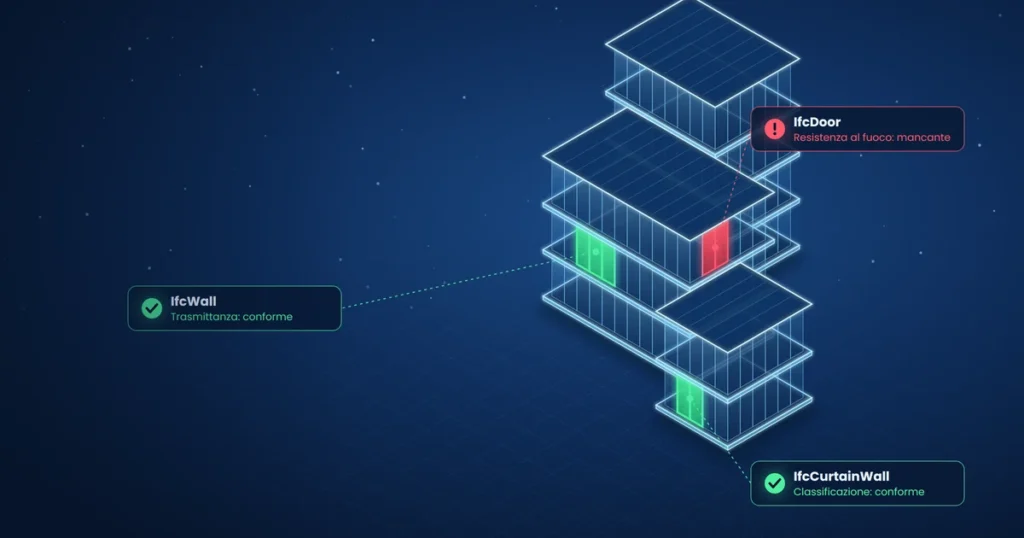
When discussing AI applied to the construction industry, the debate often focuses on capabilities: what it can do, what it cannot do, and how accurate it is. However, there is a deeper question that the AEC industry should be asking: what kind of AI do I need to operate according to professional standards?
The hallucination problem in AEC
It increasingly appears that the issue of AI hallucinations is being addressed by major technology companies. Nevertheless, while hallucinations remain an important concern, two other critical challenges deserve equal attention: the lack of governance and the unresolved question of data ownership and usage.
A general-purpose AI model generates responses that are plausible rather than inherently verifiable. In the context of a construction project, this means it may reference a non-existent regulation, miscalculate an area, or fail to detect inconsistencies between different disciplines. This is not a malfunction—it is simply how Large Language Models are designed to operate.
In many industries, a plausible but inaccurate answer is an inconvenience. In the AEC sector, it carries a specific and significant consequence: professional liability.
What deterministic AI means
A deterministic AI system does not “guess” the most likely answer. Instead, it derives its output from a set of verified and traceable sources through a reproducible logical process. Every output is anchored to a real source, and every step can be verified.
Achieving this in the construction industry requires a fundamentally different architecture from that of a general-purpose AI assistant. Rather than relying on a single model trained on everything, it requires specialized models for specific domains, supported by structured and validated knowledge sources.
EDBIM’s architectural approach
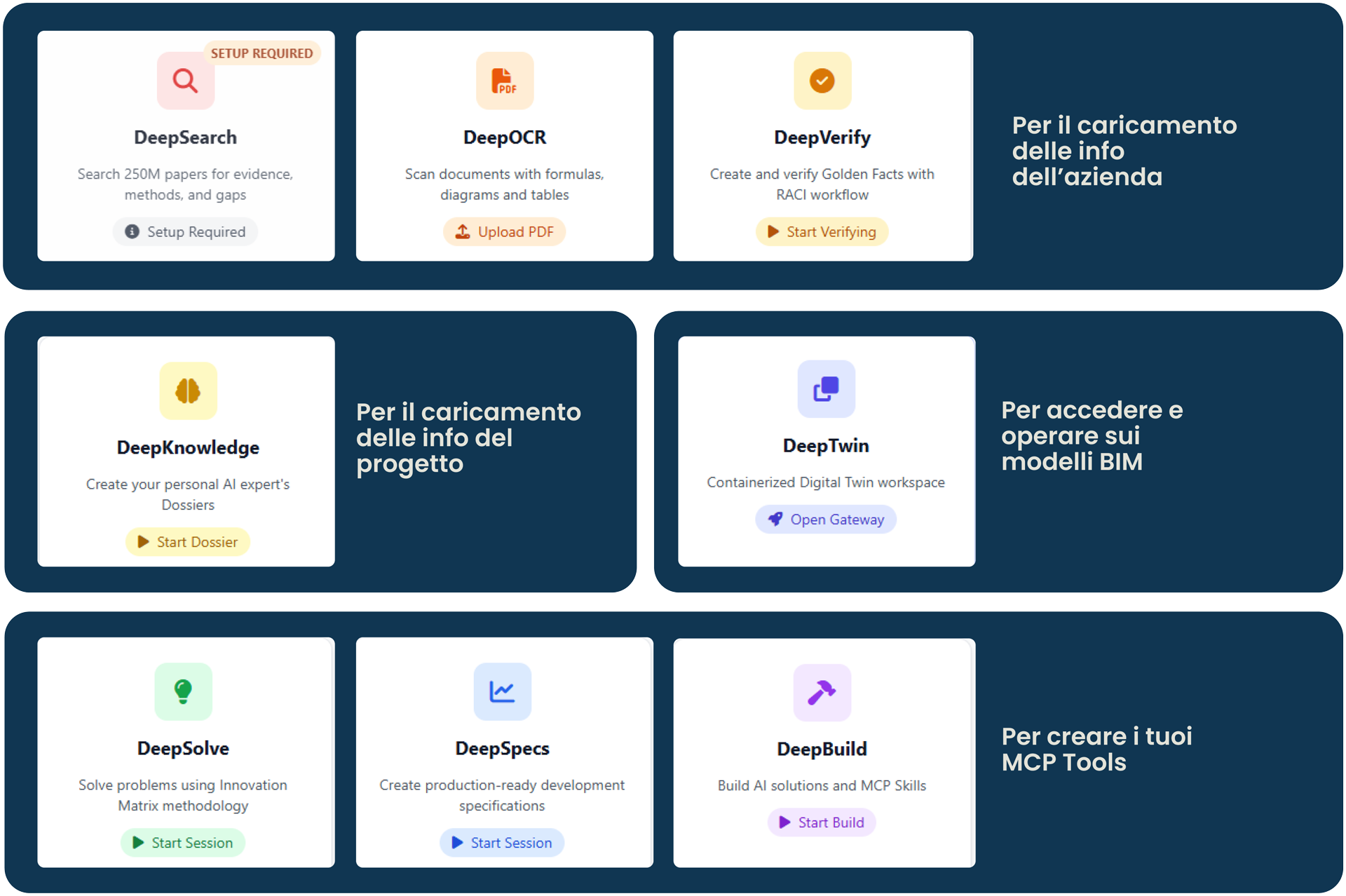
EDBIM is built on nine Short Language Models, each dedicated to a specific phase of the AEC process, from Briefing to Facility Management. Every model operates within its own domain and is supported by a structured knowledge base built upon approximately 250 million verified scientific articles, as well as the company and project information uploaded directly by users.
This architecture is further enhanced by DeepModules: preparation and validation tools that ensure AI-generated responses are grounded in verified facts rather than generic knowledge. Through a RACI-based workflow, these modules eliminate hallucinations at their source.
DeepModules also serve as the core mechanism for integrating company-specific information into AI responses and for querying project documentation in a structured and reliable manner.
Why openBIM is not a minor detail
Compliance with OpenBIM principles and ISO 19650 standards is not simply a quality label. More importantly, OpenBIM ensures that AI operates within process standards already recognized and adopted by the AEC market.
At its core, OpenBIM provides organizations with freedom from dependence on any single software vendor or multinational corporation. It enables interoperability and long-term control over information without locking users into proprietary formats or ecosystems.
For AI systems, this means working within established industry frameworks rather than creating new dependencies or opaque processes.
The most important question to ask any AI tool
Before adopting any AI solution within a construction workflow, it is worth asking a simple question:
If this system produces an error, am I able to identify it, trace it, and correct it?
If the answer is no, then the issue is not AI itself—it is a matter of professional governance.
In the AEC industry, the real distinction is not between more or less intelligent AI. It is between systems that support accountability and systems that obscure it.