The construction industry is one of the most complex in the world. Unlike other industries, it is difficult to identify a standard operating universally recognized.
If the computer has been consolidated in the Scrum method, in the automotive industry, the Toyota Production System and project management the Agile philosophy, in the building industry, the situation is very different: every project is unique, non-repetitive, and processes are constantly changing. For this, innovation in the sector requires tools that are able to adapt to the complexity of real-shipyards and design.
BIM and digitalization: a step forward, but still not quite
The methodology BIM (Building Information Modeling) has represented a fundamental turning point for rethinking the flow of information between the different actors of the building process.
A workflow BIM effectively allows you to reduce waste and inefficiencies, improving collaboration between stakeholders, to design directly in 3D environment, and more precisely control the status and the quality of the information.
However, despite these advantages, the adoption of BIM is still slow and often the processes are not really snelliti or redefined. The question today is: what workflows have become really more effective?
The artificial intelligence in BIM: the new revolution
Today, we face another major transformation: the entrance of THE building.
Digitization has arrived with a delay in the AEC industry, in spite of the BIM is born already in the ’70s and early software have appeared in the ’80s. Now, however, the challenge is even bigger: how can we use artificial intelligence in a practical way, avoiding solutions surface?
A language model (LLM) can find the information online, but do not truly know the internal procedures of a technical study, and the design choices consolidated in the time or the experience gained on similar projects.
In the construction industry it is not enough to be “almost correct”: the need for precision, reliability, and a deep knowledge of the context.
EDBIM: not just a simple chat, but digital assistants-to-measure
From this need was born the vision of EDBIM.
EDBIM is not a simple CDE with a chatbox TO the integrated today, many of the software offer similar functionality. The difference is that EDBIM was born to integrate into the business processes of the real customer.
We speak of a platform-based assistants TO specialists, able to cover specific phases of the construction process and working as a junior designer and digital. Thanks to the training on projects and company data, these assistants can support the operational activities with a level of unique customization.
Automation of the processes of BIM: what can you do EDBIM
EDBIM can be integrated in the workflow business to automate and optimize many strategic activities.
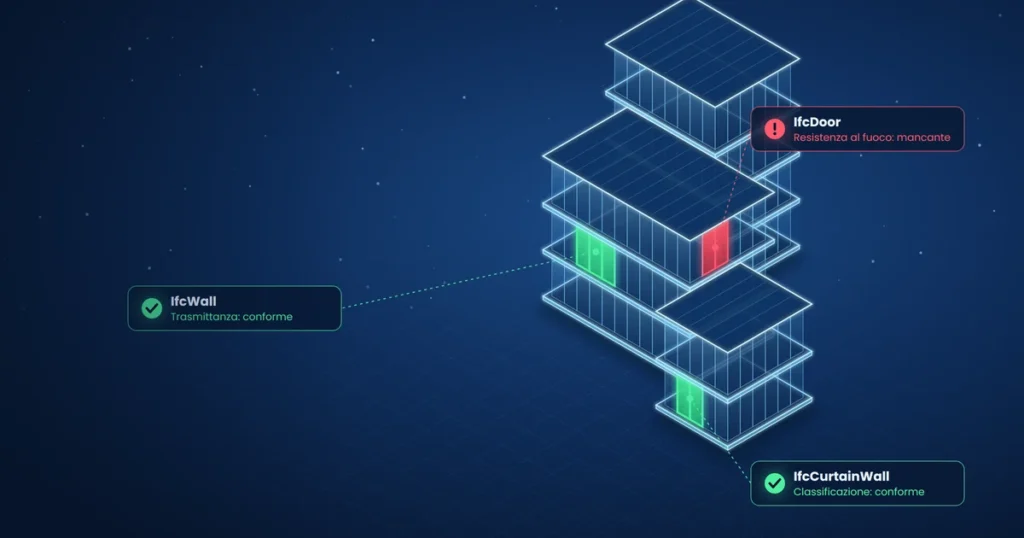
For example, the analysis, verification and validation of models, IFC, improving the consistency of information and quality control. It can also support the analysis and the synthesis of the project documentation in the entrance, pulling out quickly the most relevant information.
Another key area concerns the operational management: connecting to corporate email, EDBIM can contribute to the automatic creation of tasks and to-do list for the work team. At the same time, can help in the identification of reference standards, starting from the specific context of the yard.
EDBIM also intervenes on the formal check of the drawings — how to pictures, texts and shares — and integrates with the main modeling software to enhance the analysis of information models.
These are just some of the applications: EDBIM has already developed more than 2000 specific tasks, along with all the macro-phases of the building process, from the initial briefing to facility management.
A platform of collaboration between people and
EDBIM is a platform of collaboration, not only among professionals, but also among professionals, and artificial intelligence.
The technological revolution in the construction industry is often slow, but today we have a real opportunity to reduce time, eliminate repetitive tasks and focus on those high-value design.
With EDBIM we not only introduce the BIM: we aim towards intelligent automation and the efficiency of the various phases of the project.
Do you want to discover how to EDBIM can integrate into your workflows?
EDBIM is thought of as a “tailoring” digital: each solution is custom-built according to the specific needs of the organization.